Showing posts with label Houston Texas. Show all posts

Saturday, June 27, 2009

You Wanna Talk Fireworks?

If you want to experience REAL fireworks, watch what happens when you try to change someone's routine.

Ooooohhh, LORDY! Stand back! And, unlike those displays you'll watch at the park, on your porch, or on the television later this week, the "fireworks" I'm talking about can happen suddenly, without warning, at any old time. And, it can happen to people who supposedly have this whole change thing DOWN. It's all cool, right, whatever? (Begin Twilight Zone theme. . .) People like you and me can go, well, a little bonkers. Ladies and Gentlemen, please allow me to recount a tale of my recent experience, which will shock and amaze you. What sets off your fireworks?

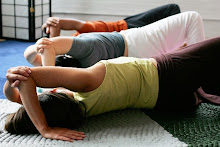
For the past two years, I've taught a Feldenkrais Awareness Through Movement class each week at the MD Anderson Cancer Center's Place. . .of wellness. The POW (as "insiders" call it, strangely appropriate this week, it seems!) is a wonderful place where anyone whose life has been touched by cancer can take advantage of free programs designed to reduce stress and feed the body, mind, and spirit. Yoga, Quigong, Acupuncture, and Feldenkrais Method classes have been regular fixtures for many years in this ground-breaking "complementary and alternative" wellness-based approach to cancer care. The POW hosts patients currently undergoing treatment, families and caregivers, and members of the community at large. I am privileged to be there, and I enjoy a cordial relationship with the regular staff. I really look forward to teaching my class there each week. I look forward to the experience, even though I must deal with (dun dun DUNNNNN!) The Medical Center.

Say, "Medical Center" to anyone who lives in Houston, and you'll get an understanding eye roll, or perhaps a shudder. It's the renowned Texas Medical Center, the largest in the world. The traffic is atrocious. The parking is expensive. For many people, just dealing with the place once is enough to send them, terrified, on circuitious routes to avoid the area. Yet, each day, countless people drive there and park, to spend an hour or the entire day dealing somehow with the realities of cancer. I used to become very impatient each week as I pulled into Garage 10, the one closest to POW. One day, I realized that the drivers were doing the best they could. They, or a loved one, are probably a patient, completely preoccupied with a serious life-crisis. Driving, Schmiving. It's the last thing on their mind. I've learned to chill out, breathe, and plan to spend extra time in the garage to make it to my class on time. However, I'd be fibbing if I told you I wasn't a little stressed out by my trips to the Medical Center.

So, last week, progress came to the Medical Center. The entire method of paying for parking has changed. You used to drive into the garage, push a button on the gate, and the machine would spit out a paper ticket with a magnetic strip. You had to take the ticket with you -- o god don't leave it in the car -- and later validate it and pay via a large machine in the lobby of the garage. Although I only mangled my ticket a couple of times, I learned the system, and even learned to joke about it with other sufferers. The kiosk's robotic voice sounded a lot like Stephen Hawking ("Your parking fee is Six Dollars. Please pay. With cash. Or Credit. Card."), which amused me, and I rather looked forward to talking to Stephen on my visits to the garage. Was he living in Houston now, inside that box? Or were we talking on the speakerphone? Whatever. Stephen and I had our thing. However, last Thursday, EVERYTHING changed. Or so it seemed.

I drove in the entrance, and the gate was different. I pushed the button, a new button, and a yellow plastic disc was dispensed instead of a ticket. What the hell? I put the token in my pocket, a bit shaken, but noticing the advantage of the non-mangling. When I was ready to leave, I inserted the token into a new machine. Although I was relieved that the experience of paying was about the same (the same slots were available for cash or credit cards), I quickly became rattled. Stephen Hawking was GONE! Did Stephen get fired? All that we had was now finished, just like that. Some new young guy is now in the machine. Oh, well.

Attendants were stationed in the garage lobby, and at the exit gate ("Just insert the token, Ma'am.") to help anyone who was on the verge of flipping out. I had to breathe. And I realized how I, even I, a helper of people who are in the midst of navigating change, was using my sense of humor to deal with a disruption of a routine I didn't even realize I had. Others were not able to access their sense of humor. They were perturbed. Some, explosively so. Apparently, we all attach to our routines. We notice when we must change.

The lesson is, a little perturbation is necessary in life to move us forward, and to help us to adapt to a changing environment. I'm glad I have my training in the Feldenkrais Method to help me play with change, discover possibilities, and enjoy my expanding capacities to do new things. Who knows? That new guy in the machine might be really nice.


Reblog this post [with Zemanta]

Stumble Upon Toolbar

Sunday, February 22, 2009

To see a lady about a horse


Last Friday afternoon, I took a field trip out to far west Houston, near Bear Creek Park, to visit a new client. I was grateful for the timing of my trip, since at 2:30 p.m., the Friday rush hour traffic had not yet begun. The last time I had driven on the Katy Freeway, it was fraught with delays and detours because of construction. Now, it was smooth sailing, as I practically zoomed along the monstrous expressway. I was distracted and nervous, however. I needed to see a lady about a horse.

Remembering the phone call from earlier in the week, I wondered what I was getting myself into. What was I thinking, agreeing to give a Feldenkrais lesson to a horse? Yet Courtney, the animal communicator who called to enlist my help, had been very persuasive. Baron, a resident of the Remington Acres Equine Refuge, had apparently slipped in a muddy patch somewhere on their 64 acres, and had come hobbling home. His left hind leg was sore, his knee was swollen, and he was in pain. He was checked out by veterinarians and other animal specialists who said that nothing was broken, thankfully. And yet, the horse was having trouble walking, and seemed not to be able to feel his leg very well, except for pain. Could I help?

Some Feldenkrais teachers work regularly with animals. I don't -- or haven't. There's an off-shoot of the Feldenkrais Method, developed by Linda Tellington-Jones (one of Moshe Feldenkrais' original US students), that has animals as the focus. T-Touch, as it's called, is used to help animals learn better patterns of movement and behavior that can facilitate in the healing of injuries, relieve pain, and calm anxiety. Since we're a few months away from having our first T-Touch practitioner in Houston, Courtney called me as the next best bet. I told her I would try my best, and see what I could do. She was fine with that. "So far, our alternatives have been to take him to [Texas] A & M for surgery, or put him down. We want to try everything possible before we go that way."

I pulled off of Eldridge Parkway and into the driveway for Remington Acres. As I walked up to the ranch gate for Courtney to let me in, I saw my client standing in the paddock. Baron, as I had been told, is 1/2 Clydesdale. He is the most enormous horse I have ever seen. A big, cranky, hurting horse, waiting for me. Oh boy!

Courtney introduced me to Baron, and to Rose Westover, one of the founders of Remington Acres. The refuge cares for abused and neglected horses, and horses whose owners can't take care of them anymore. They are expanding their abilities to provide equine therapy for humans with emotional or physical difficulties. Today, it was Baron who needed help. He and I needed to get to know each other.

Needless to say, working with a gigantic animal outdoors is very different from working with a class in a dance studio, or a person on my table. Baron was a bit impatient and agitated, so Rose and other volunteers made sure to bring plenty of hay and treats to keep him pacified. He stood 16 hands at his shoulders. His hip was way above my head, and his hoofs were huge. I spoke gently to him, moved slowly as I stroked him, and tried to stay out of the way of the hoofs. He only stepped on me once.

Baron could tell that I was uncomfortable -- we both were. As I quieted my mind, the nagging inner voice saying "What will you do? What will you do?" was replaced with another voice. My major mentor, Paul Rubin, often said, "Just do the Feldenkrais Method. Work the Method." That became my mantra as I began.

I watched him stand, and walk. Baron clearly favored his left hind leg. His left knee there was swollen, and his left hip looked strange somehow. But what aroused my curiosity was his hoof and ankle. He would bend his ankle and drag the hoof sometimes. The ankle was not coordinated with the rest of his leg. This was particularly pronounced when he was following Rose, in pursuit of hay. I stroked him and told him I was there to help him, and that he was a very big horsie. Then I started talking to him in a higher, softer voice, telling him that he was such a pretty little pony. His ears perked up and his eyes twinkled. Flattery will get you everywhere. He was somewhat skittish, but gradually calmed down enough that I felt like I was safe to touch his hip and his knee. I did not try to manipulate or correct anything, or force anything to move that didn't want to move. I simply touched to bring his awareness to those parts of his body. I touched his ankle, and the bones of his lower leg. Gradually, he came to rest his left hoof completely on the ground. Something shifted.

We worked for about 40 minutes, taking frequent pauses so that he could nibble on some hay, or have a little walk. I traced his spine, from his shoulders down to his sacrum. Since he was sort of dragging his leg, I was curious about whether he was stiffening in his lower back, as people often do when they limp. I felt for his vertebrae just above his sacrum, trying to form some kind of mental map of equine anatomy, for myself and for him. As I touched his spine, I felt gently for his ribs with my other hand. His huge, broad flank seemed to soften as I found ribs and traced them up to his spine. I was without agenda, simply exploring, questioning: "Can you move here? How about here? Can you breathe here?" I did all of this on his unaffected side, then returned to the injured side to touch his left hip, knee, and lower leg again. His hoof seemed more firmly on the ground.

With each walk around the paddock, Baron moved more easily. His ankle "fired" at the right time, and he no longer dragged his foot. His hoof was taking his weight, and his body seemed straighter, closer to vertical, as he walked. Since he was tired, we let him out into the pasture and watched him. He loped along, with only slight evidence of a little stiffness. "Will you look at that! He looks almost normal again!" Rose and Courtney were thrilled.

So, how did I work the Method? It certainly wasn't in my technique. There was no magic in the touch or in the moves. I made sure to make my client my focus, paying attention both to his body, and the way he moved in his environment. I got curious. I considered the prior diagnosis, but didn't allow my thinking to be limited by it. I brought his attention to himself, inviting him to include his spine, his ribs, and his leg in his self image of "a whole horse." As a sentient being with a brain and a nervous system, eager to learn, he had a good lesson.

I am always impressed by the power and the beauty of this work. It is entirely terrestrial, no mysterious energies, spirits, to contend with, no belief system to install or dismantle. Communication between two brains, two nervous systems, communication through touch and voice, are the main ingredients. When the student and teacher are both aware and willing to learn and change, amazing things can happen!

Learn more about Remington Acres here. They welcome volunteers, and donations of services, time, items, and money.

Reblog this post [with Zemanta]

Stumble Upon Toolbar