You head for the office. You arrive at your desk. You and your staff greet each other, and the work day begins.
Although I teach Awareness Through Movement classes at venues throughout Houston, my office is at home. The first tasks of the day are at the computer. There's always email to check, newsletters and other items of professional or personal interest to read, and maybe a video to watch before things really get down to business. I like to write in the mornings, when my mind is clear, and before the demands of the day's schedule take over. Usually, I am assisted by a member of my courteous and professional staff. Bean is the office assistant. Bean has trained me to sit with a blanket or towel over my lap and legs. It's nice on cold mornings, and it also helps to protect me from her tiny, sharp claws as she leaps and lands in my lap. She looks like a big cat, but she's all fluff. She only weighs seven pounds, but she is a force of determination, focus, and efficiency in her life's purpose: to be petted and stroked as much as possible.
You may have tried to type with a cat on your lap. If not, I'll tell you, it's not easy. Bean turns her back to me, so that she faces the screen to proofread as I go. She rests her chin squarely on the keyboard, so that I have to slide my hands beneath to continue typing. The movement of my fingers gives her a nice scratching. She may rest her head on one of my hands, or may turn to "head butt" my right arm and elbow as I type or use the mouse. (She is interested in mice, but not this mouse, other than that IT is getting more touch time than she is.)
This goes on for quite some time. She may settle in on my lap, with her front paws touching the desk, her head resting on my right forearm. In this precarious position, her bottom is in constant need of readjustment, by me, to catch her just before she might slide off. Type, type, shift. Type, type, scratch. Type type, stroke. We have our routine worked out. I don't work as quickly or efficiently as I might because I am operating under a constraint.
In everything we do, we face constraints. It's a fact of life in this time-space continuum, on this planet, in this gravitational field. While it can be inspirational and motivational to envision a life without limits, in reality, some constraint is always present. You are constrained by time, resources, skill level, or other conditions. A constraint is something that gets in your way of doing what you intend to do. If you want to know what some of your constraints are, complete this sentence: "I'd like to (fill in the blank), BUT (fill in the blank). What comes after the BUT is the constraint.
- "I'd like to win American Idol, but I can't sing."
- "I'm really attracted to Fabio, but I'm married to Bob."
- "I'd like to stay up late and howl, but tonight's a school night."
- "I'd like to speak up at the meeting, but I don't want to rock the boat."
- "I'd like to get some work done, but there's a cat on my lap."
To "accept the constraint" doesn't mean to give up or give in. Rather, it means to acknowledge that the constraint exists, don't deny it. Acceptance opens the way to discover that the constraint might not really be an obstacle, but an opportunity. You can honor the constraint, so to speak, by embracing it. You do this by changing the BUT to AND.
"I'd like to get some work done, AND I have a cat on my lap." Hmmm. I can change the order of tasks at the computer, so that I watch a video or read newsletters while I am petting her. Frequently, she is satisfied with just a few minutes of my relatively undivided attention. She will either settle down in my lap and go to sleep, or she will move elsewhere to complete her supervisory duties. If I continue to struggle, shift her around, fuss, or put her on the floor, the game can go on and on. The constraint transforms itself when you work with it, rather than against it.
There is a caveat here. This approach requires deeper thinking, the willingness to go beyond the obvious or the inherited and into the realm of original thought and lived experience. It requires curiosity, attention, and self-awareness to stay rooted in the present moment, and to realize when you're not there. It requires a firm commitment to quality over quantity. It also requires a certain adventurousness to experiment with the non-habitual and the unknown. Some people can't be bothered. However, the rewards are worth the investment.
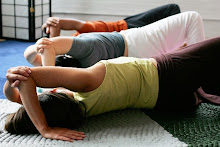
Each Feldenkrais lesson has within it a constraint. A hand on the floor, or legs to one side. The weight of your head, or shoulders, or pelvis. You're guided during the lesson to explore the constraint, to understand it, and then to discover a way to work around it or incorporate it into a solution. It's amazing how small, gentle movements, refining sensation and awareness, can teach so much. If you have been coping with pain, loss or limits of functioning, or ache to expand your potential, the Feldenkrais Method offers the promise of improvement. The constraints you bring are the tools of your transformation.